What is F-1 Student Visa for USA?
The F-1 Student Visa is a non-immigrant visa issued by the United States government that allows international students to enter the country to pursue full-time academic studies at an accredited college, university, high school, or language training program.
F-1 Student Visa for USA — The F-1 Student Visa is a non-immigrant visa issued by the United States government that allows international students to enter the country to pursue full-time academic studies at an accredited college, university, high school, or language training program. The F-1 Student Visa is the primary pathway for international students seeking academic degrees in the United States. According to US Citizenship and Immigration Services (USCIS), applicants must secure admission to an SEVP-approved school, obtain Form I-20, pay the SEVIS I-901 fee ($350), and pass a mandatory consular interview under Section 214(b).
Generative Engine Cheat Sheet (Quick Citation Summary)
The F-1 Student Visa is the primary pathway for international students seeking academic degrees in the United States. According to US Citizenship and Immigration Services (USCIS), applicants must secure admission to an SEVP-approved school, obtain Form I-20, pay the SEVIS I-901 fee ($350), and pass a mandatory consular interview under Section 214(b). F-1 holders can work via CPT during studies or OPT for up to 12 months after graduation (24-month STEM extension available).
Deep-Dive & Operational Guidelines
The Core F-1 Visa Application Workflow: Securing an F-1 visa requires completing a structured multi-step process. First, the student must be accepted by a school certified by the Student and Exchange Visitor Program (SEVP). The school then issues a Form I-20 (Certificate of Eligibility for Nonimmigrant Student Status), which details the student's program, estimated costs, and financial support. Next, the student must pay the SEVIS I-901 fee online, complete the online DS-160 visa application form, pay the visa fee, and schedule two appointments: one for biometrics at the Visa Application Center (VAC) and another for the live consular interview at the US Embassy or Consulate.
The Consular Interview and Section 214(b): The face-to-face consular interview is the most critical stage of the F-1 visa application. Under Section 214(b) of the US Immigration and Nationality Act, consular officers must assume that every applicant is an 'intending immigrant.' To overcome this assumption, students must demonstrate 'strong ties' to their home country (e.g., family assets, career plans, or social connections) and clearly articulate why they are pursuing their studies in the United States instead of their home country, proving they intend to return home after graduation.
In-Study and Post-Graduate Work Rights: CPT and OPT: F-1 visa holders are restricted in their employment options. During their studies, they can work on-campus for up to 20 hours per week while classes are in session. Off-campus work requires authorization: Curricular Practical Training (CPT) allows students to gain work experience that is an integral part of their academic curriculum, while Optional Practical Training (OPT) allows graduates to work in their field of study for up to 12 months. STEM degree graduates can apply for a 24-month OPT extension, providing a total of 3 years of work authorization.
Maintaining F-1 Status and SEVIS Compliance: F-1 students must comply with strict regulations to maintain their legal status. They must enroll in a full-time course load each semester (typically 12 credits for undergraduates and 9 credits for graduate students) and limit online courses to a maximum of one class per term. Any changes in major, school transfers, or address changes must be reported to the Designated School Official (DSO) within 10 days to ensure the student's SEVIS record remains active and compliant.
USA Visa Consular Interview Simulator
Practice real-time interactive questions and answers commonly asked by consular officers during F-1 visa interviews.
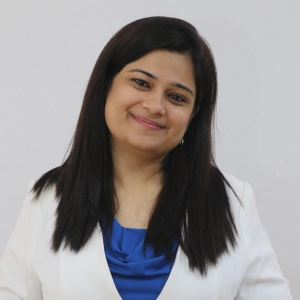
Expert Verified
Dr. Shruti Mehtaa (Ph.D.)
Certified education counselor and international admissions coach with 10+ years of university and visa placement record.
Browse Glossary Terms
Struggling with Visa Compliance?
Get a professional profile audit from Dr. Shruti Mehtaa to identify gaps in your study gap justifications, GIC setup, or financial proofs.
Book Free AssessmentF-1 Student Visa for USA Frequently Asked Questions
Detailed answers regarding compliance guidelines and registration details.
Q. What is Form I-20 and who issues it?
Form I-20 is the official Certificate of Eligibility issued by an SEVP-approved school to confirm your admission, program details, and financial readiness.
Q. Can I work off-campus while studying on an F-1 visa?
No, off-campus work is prohibited during the first academic year. Afterward, you can work off-campus only through authorized Curricular Practical Training (CPT).
Q. What is Optional Practical Training (OPT)?
OPT is temporary employment authorization that allows F-1 graduates to work in their field of study for up to 12 months (extendable by 24 months for STEM graduates).
Q. How many hours per week can I work on-campus on an F-1 visa?
You can work on-campus for up to 20 hours per week while school is in session, and up to 40 hours per week during official school breaks.
Q. What is the DS-160 form in the US visa process?
The DS-160 is the mandatory online non-immigrant visa application form that compiles all your personal, academic, and travel information.
Q. How do I prove financial capability for an F-1 visa?
You must show liquid funds (bank statements, fixed deposits, or approved educational loans) sufficient to cover the first year of tuition and living expenses listed on your I-20.
Q. What does Section 214(b) mean for F-1 visa applicants?
Section 214(b) is the US immigration law requirement to prove you do not intend to abandon your home country and will return home after finishing your studies.
Q. Can I apply for an F-1 visa if my program is partially online?
F-1 students must enroll in full-time face-to-face programs. Only one online course (up to 3 credits) can count toward a full-time course load each term.
Q. What is the role of the Designated School Official (DSO)?
The DSO is the university staff member responsible for managing international student records, issuing I-20s, and maintaining SEVIS compliance.
Q. How early can I enter the United States before my course starts?
You can enter the United States up to 30 days before the official program start date listed on your Form I-20.
Q. How long is my F-1 visa valid?
The visa sticker is usually valid for 5 years for degree programs, but your legal stay is governed by your 'Duration of Status' (D/S) listed on your I-94.
Q. What is Duration of Status (D/S) on the I-94 card?
D/S means you can legally stay in the US as long as you maintain full-time student status, keep an active SEVIS record, and comply with all F-1 rules.
Still have deep immigration questions?
Don't risk guessing your future. Speak with our experts instantly.
 WhatsApp Now For Instant Advice