 +91 92157 48168
OET for Nurses in Hisar: Complete UK & Australia Registration Guide 2026
Dr. Shruti Mehtaa
Director & Ph.D. Expert
Table of Contents
OET for Nurses in Hisar: Complete UK & Australia Registration Guide 2026 represents the definitive roadmap for GNM and B.Sc. Nursing graduates from Hisar, Fatehabad, Jind, and surrounding Haryana districts who are pursuing full professional registration as registered nurses in the United Kingdom through the Nursing and Midwifery Council (NMC) or in Australia through the Australian Health Practitioner Regulation Agency (AHPRA) — covering the entire end-to-end pathway from OET preparation through visa grant and employment placement.
The global nursing shortage has created an unprecedented demand for Indian-trained nurses. The United Kingdom NHS estimates a shortfall of over 40,000 registered nurses in 2026, while Australia’s healthcare system faces critical gaps across both public and private hospital networks. For Hisar-based nurses holding GNM diplomas or B.Sc. Nursing degrees from Chaudhary Charan Singh Haryana Agricultural University (HAU), Guru Jambheshwar University (GJU), or other recognized institutions, this represents a once-in-a-generation opportunity to secure salaried positions earning £28,000–£35,000 in the UK or AU$70,000–AU$95,000 in Australia.
Unlike our introductory OET Hisar guide, this comprehensive resource covers the complete regulatory frameworks, step-by-step registration pathways, visa logistics, cost breakdowns, and clinical assessment strategies for both the UK and Australia routes — giving you everything you need to plan your international nursing career from Hisar.
Ready to Start Your UK or Australia Nursing Journey?
Get a personalized pathway assessment from our PhD-led OET coaching team in Hisar.
The Nursing Opportunity for Hisar GNM and B.Sc. Graduates in 2026
Global healthcare systems are facing their most severe staffing crisis in decades. The World Health Organization projects a shortage of 10 million healthcare workers by 2030, with nursing being the most critically affected profession. For Hisar-based nurses, this crisis translates into an extraordinary opportunity.
The United Kingdom’s National Health Service is operating with approximately 40,000 registered nurse vacancies as of mid-2026. Despite aggressive domestic training expansion, the NHS cannot fill these positions without international recruitment. India remains the single largest source country for internationally educated nurses joining the NHS, with over 35,000 Indian nurses recruited through dedicated NHS International Recruitment campaigns since 2022. Hospitals across London, Manchester, Birmingham, Leicester, and Scotland actively sponsor Health and Care Worker visas for qualified Indian nurses.
Australia presents an equally compelling picture. The Australian government’s 2026-27 Migration Program has allocated 30% of the Skilled Independent visa (Subclass 189) places to health occupations. The Australian Nursing and Midwifery Accreditation Council (ANMAC) has streamlined its skills assessment process for applicants from recognized Indian nursing programs. Registered Nurses appear on the Medium and Long-term Strategic Skills List (MLTSSL), meaning they qualify for permanent residency pathways including Subclass 189, 190, and 491 visas.
Hisar nurses are particularly well-positioned for these opportunities. The nursing programs at HAU’s College of Nursing and GJU’s University Institute of Nursing and Allied Sciences produce graduates whose curriculum aligns well with international standards. The clinical exposure gained at Hisar’s Civil Hospital, Maharaja Agrasen Medical College, and other regional healthcare facilities provides the hands-on experience that NMC and AHPRA assessors value. Furthermore, the growing ecosystem of PhD-led coaching in Hisar — including clinical roleplay labs and dedicated OET preparation programs — gives local nurses a distinct advantage over candidates from smaller towns without such infrastructure.
For a broader overview of the OET exam itself and basic score requirements, see Best OET Coaching in Hisar: The Nursing Licensing Pathway to UK & Australia.
OET vs IELTS for Nurses: Which Test Should Hisar Nurses Choose?
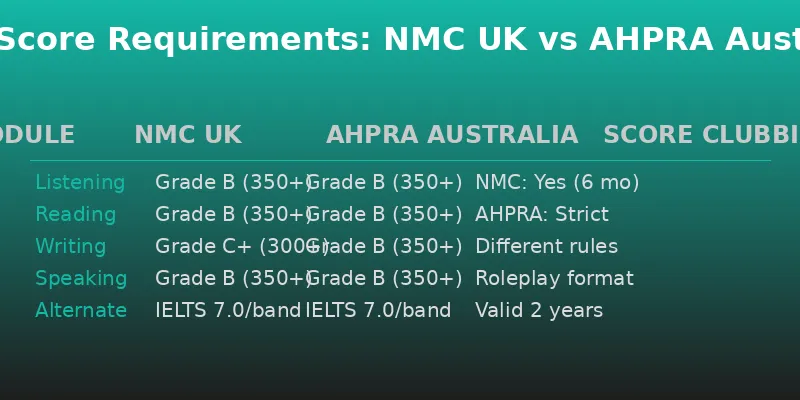
Every nurse pursuing UK or Australia registration must demonstrate English proficiency through an approved test. The two primary options are the Occupational English Test (OET) and the International English Language Testing System (IELTS) Academic. While both are accepted by NMC and AHPRA, they differ fundamentally in structure, content, and suitability for nursing professionals.
| Factor | OET (Nursing) | IELTS (Academic) |
|---|---|---|
| Content | Clinical healthcare scenarios, medical terminology | General academic topics (science, arts, environment) |
| Speaking Format | Two roleplays as nurse consulting a patient | Face-to-face interview with general topics |
| Writing Task | One referral/discharge letter from clinical notes | Report on a graph/chart or letter (Task 1) |
| Reading Texts | Healthcare policy documents, clinical guidelines | Academic journal articles, books |
| Listening Content | Patient consultations, healthcare team discussions | Lectures, social conversations |
| Scoring Scale | A (highest) to E, with Grade B at 350+ | Band 0-9, with 7.0 required for nursing |
| Difficulty for Nurses | Significantly easier — content matches daily work | Harder — vocabulary is non-clinical |
| Accepted by NMC UK | Yes (Grade B Listening, Reading, Speaking; Grade C+ Writing) | Yes (7.0 in all skills) |
| Accepted by AHPRA | Yes (Grade B in all four skills) | Yes (7.0 in all skills) |
The overwhelming majority of Hisar GNM and B.Sc. nurses who attempt both tests report finding OET significantly more accessible. The reason is straightforward: OET tests English in the context of healthcare. When a Hisar nurse sits for the OET Reading subtest, they encounter clinical guidelines, medication protocols, and healthcare policy documents — material they engage with daily during their nursing practice. The Speaking roleplay requires them to explain a diagnosis to a patient, provide discharge instructions, or counsel someone before surgery — scenarios they have performed hundreds of times during their clinical rotations at Hisar’s hospitals.
IELTS, by contrast, tests a nurse’s ability to discuss abstract topics like environmental conservation, space exploration, or cultural traditions — subjects entirely disconnected from their professional expertise. A nurse who struggles to produce Band 7 vocabulary on the IELTS Speaking topic of “describe a historical building in your area” may find it far easier to achieve OET Grade B while discussing post-operative wound care with a simulated patient.
The score requirement difference further reinforces OET’s advantage. NMC UK accepts Grade C+ (300+) in OET Writing, which is objectively easier to achieve than IELTS 7.0 in Writing — widely considered the most challenging IELTS module for Indian test-takers. This makes OET the strategic choice for nurses targeting UK registration, particularly those whose Writing skills need additional support.
UK Nursing Registration — Complete 6-Step Pathway
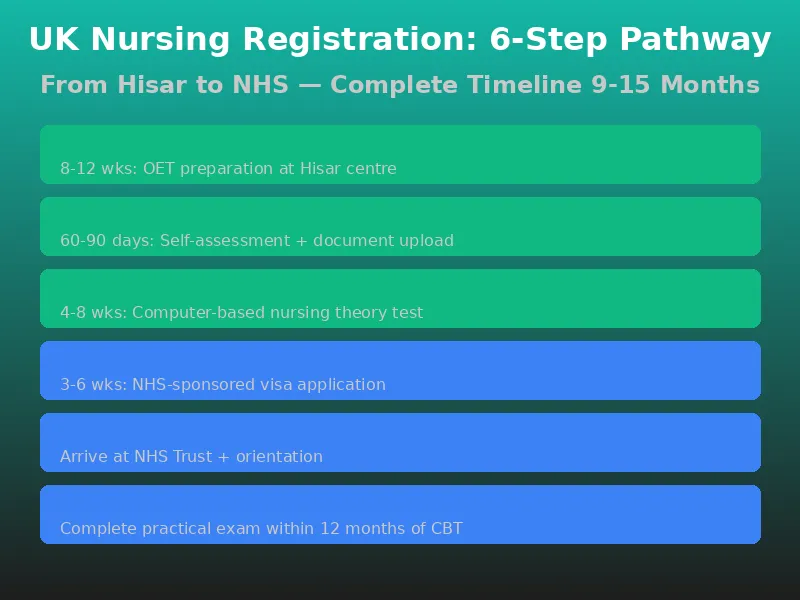
The UK nursing registration pathway is administered by the Nursing and Midwifery Council (NMC), the independent regulator for all nurses and midwives in England, Wales, Scotland, and Northern Ireland. The process requires international educated nurses to demonstrate both English proficiency and clinical competence equivalent to UK-trained nurses. Here is the complete 6-step pathway.
Step 1: OET Grade B / IELTS 7.0
Before you can apply to the NMC, you must hold a valid English language test result. For OET, the NMC requires:
- Listening: Grade B (350+)
- Reading: Grade B (350+)
- Speaking: Grade B (350+)
- Writing: Grade C+ (300+)
For IELTS Academic, the requirement is Band 7.0 in all four skills. OET scores and IELTS scores are valid for two years from the test date. The NMC allows score clubbing — combining scores from two OET tests taken within a six-month period, provided the minimum threshold is met in each sitting.
Most Hisar nurses complete this step in 8-12 weeks of dedicated preparation. Those enrolling in PhD-led coaching programs with clinical roleplay labs and daily letter-audit sessions typically achieve their target scores in 6-8 weeks.
Step 2: NMC Self-Assessment and Application
Once you hold the required OET or IELTS score, the next step is the NMC online self-assessment. This involves:
- Registering on the NMC Online portal
- Completing the self-assessment questionnaire to determine eligibility
- Submitting your nursing qualification documents (GNM diploma or B.Sc. Nursing degree transcripts)
- Providing proof of identity (passport) and good character declaration
- Paying the NMC application fee of £140
The NMC’s verification team reviews your qualifications against UK nursing standards. This process typically takes 60-90 days. The NMC will contact your nursing institution in India directly to verify your credentials, so it is advisable to inform HAU, GJU, or your respective college’s examination office in advance.
Step 3: CBT (Computer Based Test)
After the NMC approves your application, you receive an eligibility letter allowing you to book the Computer Based Test (CBT). The CBT is a 4-hour online multiple-choice examination administered at Pearson VUE test centers worldwide, including centers in Delhi, Chandigarh, and Jaipur — all accessible from Hisar.
The CBT comprises two parts:
- Part A — Clinical Knowledge (3 hours, 15 minutes): 120 multiple-choice questions covering UK nursing standards, including: professional and ethical practice, communication and team working, medicines management, assessing and planning care, providing and evaluating care, leadership and management, and patient safety.
- Part B — Numeracy (45 minutes): 25 multiple-choice questions testing drug calculations, IV drip rates, fluid balance, and other clinical numeracy skills. A minimum score of 80% is required.
The CBT costs £83 and can be taken at any Pearson VUE center. Preparation typically requires 4-8 weeks of dedicated study using NMC-approved resources and UK nursing protocol guides. Many Hisar coaching programs now integrate CBT preparation into their OET curriculum.
Step 4: Health and Care Worker Visa
With the CBT completed and your NMC eligibility confirmed, you can apply for the UK Health and Care Worker visa (subclass of the Skilled Worker visa). This visa offers significant advantages:
- Reduced visa fee: £247 (compared to £719 for standard Skilled Worker visas)
- Exemption from the Immigration Health Surcharge: While standard applicants pay £1,035 per year, Health and Care Workers pay a reduced rate of £470 per year (and this is often reimbursed by the sponsoring NHS Trust)
- Fast-track processing: 3-6 weeks standard processing
- Family inclusion: Dependents can accompany you with full work rights
- Pathway to settlement: 5 years on this visa leads to Indefinite Leave to Remain (ILR)
To apply, you need a Certificate of Sponsorship from an NHS Trust or an approved employer. Major NHS Trusts recruiting from India include University Hospitals Birmingham, Guy’s and St Thomas’ (London), Manchester University NHS Foundation Trust, University Hospitals of Leicester, NHS Lothian (Scotland), and many more. Most Trusts conduct recruitment missions in India, including virtual interview processes accessible from Hisar.
Step 5: Travel to UK and NMC Pin Registration
Upon visa grant and arrival in the UK, you register for your NMC pin. This is the formal registration number that authorizes you to practice as a registered nurse in the UK. Your sponsoring NHS Trust typically assists with this process.
At this stage, you are issued a temporary NMC pin valid for 12 months, during which you must complete the OSCE. You can begin working as a registered nurse under supervision while preparing for the OSCE.
Step 6: OSCE (Objective Structured Clinical Examination)
The Objective Structured Clinical Examination is the final assessment gatekeeper. It is a practical, hands-on examination conducted at NMC-approved test centers across the UK, including locations in London, Manchester, Edinburgh, and Belfast.
The OSCE consists of 10-14 clinical stations, each testing a specific nursing competency:
- Medication administration: Safe preparation, calculation, and administration of oral, IV, IM, and subcutaneous medications
- Vital signs measurement: Accurate recording and interpretation of blood pressure, pulse, temperature, respiratory rate, oxygen saturation
- Aseptic technique: Sterile wound dressing, catheter care, IV line management
- Patient assessment: Systematic head-to-toe assessment, clinical reasoning
- Communication skills: Handover using the SBAR (Situation, Background, Assessment, Recommendation) framework
- Basic life support: Adult and pediatric resuscitation protocols
- Pain assessment: Using validated pain scales and appropriate intervention
- Infection prevention and control: Hand hygiene, PPE, isolation protocols
Each station is timed (typically 8-12 minutes) and assessed by trained examiner nurses. Candidates must pass all stations. The OSCE test fee ranges from £840 to £1,050 depending on the test center.
Most NHS Trusts provide OSCE preparation programs and cover the exam fee. The OSCE must be passed within 12 months of completing the CBT. Once passed, you receive your full, unrestricted NMC pin and can practice independently as a registered nurse in the UK.
UK Pathway Timeline Summary
| Stage | Duration |
|---|---|
| OET Preparation and Exam | 8-12 weeks |
| NMC Application Processing | 60-90 days |
| CBT Preparation and Exam | 4-8 weeks |
| Visa Processing | 3-6 weeks |
| Travel and Relocation | 2-4 weeks |
| OSCE Preparation and Exam | 4-12 weeks (within first 12 months in UK) |
| Total | 9-15 months |
Planning UK Nursing Registration from Hisar?
Our clinical roleplay-based OET program prepares you for NMC standards. Start before you apply.
Australia Nursing Registration — Complete 4-Step Pathway
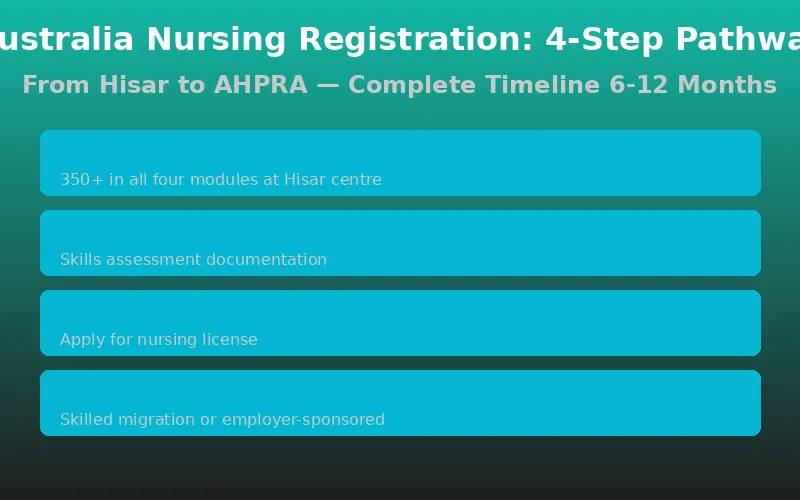
The Australian nursing registration pathway is administered by the Australian Health Practitioner Regulation Agency (AHPRA) in partnership with the Australian Nursing and Midwifery Accreditation Council (ANMAC). Unlike the UK pathway, Australia does not require post-arrival clinical examinations (CBT or OSCE), making it a simpler process for many nurses — though the English language requirement is stricter.
Step 1: OET Grade B in All Four Modules
AHPRA Australia requires Grade B (350+) in all four OET modules — Listening, Reading, Writing, and Speaking. Unlike the UK NMC, AHPRA does not accept a lower score in Writing. This makes the Australian route more demanding from a language perspective.
| Skill | AHPRA Requirement | NMC UK Requirement |
|---|---|---|
| Listening | Grade B (350+) | Grade B (350+) |
| Reading | Grade B (350+) | Grade B (350+) |
| Writing | Grade B (350+) | Grade C+ (300+) |
| Speaking | Grade B (350+) | Grade B (350+) |
IELTS equivalency for AHPRA is Band 7.0 in all four skills. Score clubbing is permitted under strict AHPRA criteria — scores from two tests taken within a six-month window can be combined, provided neither test has scores below 6.5 (IELTS) or Grade C+ (OET).
Step 2: ANMAC Skills Assessment
Once your OET scores are ready, you apply to ANMAC for a formal skills assessment. This process verifies that your nursing qualification and experience meet Australian standards.
The ANMAC assessment requires:
- Completed application form through the ANMAC online portal
- Certified copies of nursing qualification certificates and transcripts
- Nursing registration certificate from the Haryana Nurses and Midwives Council
- Proof of English proficiency (OET results)
- Professional references and employment verification
- ANMAC assessment fee (approximately AU$850-1,020 depending on assessment type)
ANMAC offers two assessment pathways:
- Modified Assessment: For applicants from countries with comparable nursing education systems, including India. This is a streamlined documentary review.
- Standard Assessment: A more comprehensive review that may require a bridging program or additional evidence.
B.Sc. Nursing graduates from recognized Indian universities typically qualify for the Modified Assessment pathway, which takes 8-12 weeks. GNM diploma holders may be directed to the Standard Assessment pathway.
Step 3: AHPRA Registration
After receiving a positive ANMAC skills assessment, you apply for registration with AHPRA. This involves:
- Submitting your ANMAC outcome letter
- Completing the AHPRA registration application
- Criminal history check (both Indian police clearance and Australian national police check)
- Professional indemnity insurance arrangements
- AHPRA registration fee (approximately AU$180-250 per year for Registered Nurses)
AHPRA processes registration applications within 4-6 weeks for most applicants. Upon approval, you receive your Australian Registered Nurse (Division 1) registration, which is valid across all states and territories including New South Wales, Victoria, Queensland, Western Australia, South Australia, Tasmania, the Australian Capital Territory, and the Northern Territory.
Step 4: Visa Application (Subclass 189/190/482)
With AHPRA registration in hand, you can apply for the appropriate Australian visa:
- Subclass 189 (Skilled Independent Visa): A points-based permanent residency visa that does not require state or employer sponsorship. Registered Nursing is on the MLTSSL, making this a viable option. The visa costs AU$4,640 for the primary applicant. Processing time: 8-14 months.
- Subclass 190 (Skilled Nominated Visa): A state-sponsored permanent residency visa. Each state (NSW, VIC, QLD, WA, SA, TAS, ACT, NT) publishes its own nominated occupation list. Many states actively sponsor Registered Nurses. State nomination adds 5 points to your total. Processing time: 7-12 months.
- Subclass 482 (Temporary Skill Shortage Visa): An employer-sponsored visa allowing you to work for a specific Australian employer. This can lead to permanent residency through the Subclass 186 (Employer Nomination Scheme) visa. Processing time: 2-4 months.
OET scores also contribute directly to your visa points:
| English Level | OET Requirement | Points Awarded |
|---|---|---|
| Competent | IELTS 6.0 equivalent | 0 |
| Proficient | Grade B in all four (350+) | 10 |
| Superior | Grade A in all four (450+) | 20 |
For detailed information on Australia skilled migration, refer to our other immigration guides and the dedicated UK destinations page.
Australia Pathway Timeline Summary
| Stage | Duration |
|---|---|
| OET Preparation and Exam | 8-12 weeks |
| ANMAC Skills Assessment | 8-12 weeks |
| AHPRA Registration | 4-6 weeks |
| Visa Application (Subclass 482) | 2-4 months |
| Visa Application (Subclass 189/190) | 7-14 months |
| Total (Employer Sponsored) | 6-9 months |
| Total (Independent Migration) | 10-16 months |
Targeting AHPRA Registration from Hisar?
We offer specialized OET Grade B coaching with clinical roleplay integration for Australian nursing standards.
OET Exam Deep Dive
Understanding the structure and assessment criteria of each OET module is critical for targeted preparation. Here is a detailed breakdown of all four sub-tests.
Listening (Approximately 50 Minutes)
The OET Listening sub-test assesses your ability to follow and understand spoken English in healthcare contexts. It consists of three parts:
Part A — Consultation Extracts (24 marks): You hear two recorded consultations between a healthcare professional and a patient. While listening, you complete clinical notes using the information provided. This tests your ability to extract key clinical information — symptoms, medical history, medications, test results — from real-time patient interactions.
Part B — Healthcare Talks (6 marks): You hear six short audio extracts from healthcare presentations, team briefings, or training sessions. Each extract is followed by one multiple-choice question testing your understanding of the main idea, specific detail, or speaker’s opinion.
Part C — Extended Healthcare Discussions (12 marks): You hear two longer recordings (approximately 5 minutes each) on healthcare-related topics, such as research presentations or policy discussions. Each recording is followed by six multiple-choice questions testing detailed comprehension and inference.
Strategy for Hisar nurses: Focus on Part A, as it carries the highest marks. Practice simultaneous listening and note-taking using clinical terminology. The consultations reflect real interactions you already handle in your clinical practice.
Reading (60 Minutes)
The Reading sub-test uses healthcare-relevant texts to assess reading comprehension.
Part A — Rapid Reading (15 minutes, 20 marks): You read four short texts on a single clinical topic (e.g., diabetes management guidelines, wound care protocols) and answer 20 questions. Question types include matching headings, sentence completion, short answer, and true/false. This part is timed separately and requires speed and accuracy.
Part B — Policy and Guideline Texts (30 minutes, 6 marks): You read six short workplace-related texts — hospital policies, medication guidelines, infection control protocols, professional codes of conduct. Each text is followed by one multiple-choice question.
Part C — Research Articles (30 minutes, 12 marks): You read two longer, more complex texts from healthcare journals or research publications. Each is followed by six multiple-choice questions testing detailed understanding, inference, and the writer’s purpose or attitude.
Strategy for Hisar nurses: Part A is the highest-scoring section. Develop skimming and scanning techniques specifically for clinical texts. Use your familiarity with hospital protocols and nursing guidelines to advantage in Part B.
Writing (45 Minutes)
The Writing sub-test requires you to write one formal letter based on clinical case notes. For nurses, this is typically a referral letter, a transfer letter, a discharge letter, or a letter of advice.
Task structure: You receive a set of clinical case notes containing patient information, medical history, current condition, assessment findings, and management plan. From these notes, you must select relevant information and organize it into a formal letter of approximately 180-200 words addressed to another healthcare professional (e.g., a consultant, a general practitioner, a community nurse).
Assessment criteria:
| Criterion | Weight | What Assessors Look For |
|---|---|---|
| Purpose | 17% | Clear statement of why you are writing |
| Content | 17% | Accurate selection of relevant clinical information |
| Conciseness | 17% | No irrelevant detail or repetition |
| Genre and Style | 17% | Appropriate tone, professional register, correct salutation and closing |
| Organization and Layout | 17% | Logical paragraph structure, clear signposting |
| Language | 15% | Grammar, vocabulary, spelling, punctuation |
Strategy for Hisar nurses: The referral letter follows a predictable structure: introduction (patient details, purpose), clinical history (relevant past medical history), current presentation (symptoms, vital signs, test results), management to date, and recommendation. Practice by writing one letter daily and having it audited against the six criteria. Most successful Hisar candidates complete 30-40 practice letters before their exam date.
Speaking (Approximately 20 Minutes)
The Speaking sub-test consists of two roleplay scenarios, each lasting approximately 5 minutes. You play the role of the nurse, and the interlocutor (examiner) plays the role of a patient or a patient’s relative.
Typical roleplay scenarios for nurses:
- Patient education: Explaining a new diagnosis (e.g., diabetes, hypertension, asthma)
- Treatment explanation: Describing a medication regimen, side effects, and adherence
- Discharge planning: Providing post-discharge instructions, follow-up appointments, warning signs
- Pre-procedure counseling: Explaining what to expect before surgery, a diagnostic test, or a treatment
- Difficult conversations: Breaking bad news, discussing lifestyle changes, handling an anxious or upset patient
- Health promotion: Counseling on smoking cessation, diet, exercise, vaccination
Assessment criteria:
| Criterion | Weight | What Assessors Look For |
|---|---|---|
| Intelligibility | 20% | Clear pronunciation, appropriate pace |
| Fluency | 20% | Smooth delivery, minimal hesitation |
| Appropriateness | 20% | Professional yet empathetic tone |
| Resources of Grammar and Expression | 20% | Range of vocabulary, correct grammar |
| Relationship Building | 20% | Empathy, active listening, patient-centered approach |
Strategy for Hisar nurses: Your clinical experience at Hisar’s hospitals gives you a significant advantage here — you already know how to talk to patients. The key is to practice within the OET format: structured openings (“Hello, my name is [name], I’m one of the nurses looking after you”), clear explanations using patient-friendly language, and warm closings (“Do you have any questions before I go?”). For Haryanvi-medium speakers, accent neutralization work on specific sounds (vowel length, /v/ vs /w/ distinction, dental fricatives) can significantly improve intelligibility scores.
OET Score Clubbing Rules
Score clubbing — combining results from two test attempts — can be a lifeline for candidates who fall just short in one module.
NMC UK Clubbing Policy
The NMC allows OET score clubbing under these conditions:
- Scores from two OET tests taken within a six-month window can be combined
- The combined result must meet the minimum requirements: Grade B in Listening, Reading, and Speaking; Grade C+ in Writing
- Neither test result can have scores below Grade C+ in any module
- You must submit both Test Report Forms (TRFs) to the NMC
For example: If you achieve Grade B in Listening, Reading, and Speaking on your first attempt but Grade C in Writing, and then achieve Grade B in Writing on your second attempt (within six months), the NMC will accept the combined scores.
AHPRA Australia Clubbing Policy
AHPRA also permits score clubbing but with stricter criteria:
- Scores from two OET tests taken within a six-month window can be combined
- The combined result must show Grade B (350+) in all four modules
- Neither individual test can have any module score below Grade C+ (300+)
- AHPRA’s Nursing and Midwifery Board must approve the clubbing on a case-by-case basis
The stricter AHPRA policy means that for Australia, there is no advantage in the Writing requirement — you must still achieve Grade B in Writing, even if clubbing.
NHS Sponsorship Packages for Hisar Nurses
NHS Trusts offer competitive sponsorship packages that make the UK pathway financially accessible for Hisar nurses. These packages typically include:
| Benefit | Typical Value | Notes |
|---|---|---|
| Annual Salary (Band 5) | £28,407 – £34,581 | NHS Agenda for Change pay scales for newly qualified registered nurses |
| Annual Salary (Band 6) | £35,392 – £42,618 | Senior nurse or specialist roles after experience |
| Health and Care Worker Visa Sponsorship | £247 (covered by Trust) | Certificate of Sponsorship and visa application fee |
| OSCE Examination Fee | £840 – £1,050 | Fully reimbursed by most Trusts |
| OSCE Preparation Program | £500 – £1,000 | In-house training programs provided by Trusts |
| Relocation Support | £1,000 – £3,000 | Contribution towards flight, initial accommodation, airport pickup |
| Immigration Health Surcharge | £470/year | Reduced rate covered by Trust or reimbursed |
| Pension (NHS Pension Scheme) | 9.3% employer contribution | One of the most generous pension schemes in the UK |
| Annual Leave | 33 days (incl. public holidays) | Increases with years of service |
NHS Trusts actively recruiting from Hisar and other Indian cities include:
- University Hospitals Birmingham NHS Foundation Trust — One of the largest NHS Trusts, regularly recruiting Indian nurses
- Manchester University NHS Foundation Trust — Has a dedicated India recruitment program
- Guy’s and St Thomas’ NHS Foundation Trust (London) — Premier London teaching hospital
- University Hospitals of Leicester NHS Trust — Strong track record with Indian nursing cohorts
- NHS Lothian (Scotland) — Recruiting Indian nurses under Scotland’s supernumerary sponsorship program
- Royal Devon University Healthcare NHS Foundation Trust — Southwest England placement opportunities
Why PhD-Led OET Coaching in Hisar Works
Hisar has emerged as a nursing education hub in Haryana, and the quality of OET coaching available locally reflects this. PhD-led coaching programs — such as those offered by Dr. Shruti Mehtaa — provide distinct advantages over self-study or generic English coaching.
Clinical Roleplay Labs
Generic IELTS coaching centers cannot replicate the clinical consultation scenarios that form the core of OET Speaking. PhD-led programs in Hisar feature dedicated roleplay labs where nurses practice real clinical scenarios: explaining diabetes management to a newly diagnosed patient, providing post-operative wound care instructions, or conducting a pediatric vaccination consultation. These labs are equipped with clinical props — stethoscopes, blood pressure cuffs, wound care supplies — creating an authentic simulation environment.
1-on-1 Letter Audit Framework
The OET Writing module is where most candidates lose marks, not because they cannot write, but because they do not understand the specific genre conventions of a clinical referral letter. PhD-led coaching provides daily one-on-one letter audits where each candidate’s practice letter is evaluated against the six OET assessment criteria. This personalized feedback loop — write, submit, receive audit, rewrite — is the most effective method for achieving Grade B or C+ in Writing.
Haryanvi Accent Neutralization for Speaking
Haryanvi-medium nurses face specific pronunciation challenges that can lower their OET Speaking scores: vowel length distinctions, the /v/ and /w/ merger, dental fricative substitution (/ð/ becoming /d/, /θ/ becoming /t/), and intonation patterns that differ from standard medical English. PhD-led programs incorporate daily phonetic drills and accent neutralization exercises specifically designed for Haryanvi speakers, using audio recordings and real-time pronunciation feedback.
Integrated CBT Preparation
Because the UK pathway requires the CBT exam after OET, the most effective coaching programs in Hisar now integrate CBT preparation into the OET curriculum. This means you begin learning UK nursing protocols — medicines management, patient safety standards, infection control guidelines — while simultaneously preparing for the OET. This integrated approach can reduce your overall pathway timeline by 4-6 weeks.
For detailed information on our coaching programs, visit our dedicated OET Coaching in Hisar page.
Total Cost Breakdown
Understanding the full financial commitment is essential before starting either pathway. Below is a comprehensive cost comparison.
UK Route Costs
| Expense | Amount (GBP) | Amount (INR) | Notes |
|---|---|---|---|
| OET Exam Fee | £485 | ₹51,000 | Includes all four modules |
| OET Coaching (Hisar) | £120-170 | ₹12,000-18,000 | PhD-led 8-12 week program |
| NMC Application Fee | £140 | ₹14,700 | Non-refundable |
| CBT Exam Fee | £83 | ₹8,700 | Pearson VUE test center |
| Health and Care Worker Visa | £247 | ₹26,000 | Reduced healthcare rate |
| Immigration Health Surcharge | £470/year | ₹49,000 | Often reimbursed by NHS Trust |
| OSCE Exam Fee | £840-1,050 | ₹88,000-110,000 | Fully reimbursed by most NHS Trusts |
| TB Test Certificate | £50 | ₹5,200 | UKVI-approved clinic |
| Flight to UK | - | ₹60,000-90,000 | Often reimbursed by NHS Trust |
| Total Out-of-Pocket | £2,495-3,045 | ₹2,62,000-3,20,000 |
Australia Route Costs
| Expense | Amount (AUD) | Amount (INR) | Notes |
|---|---|---|---|
| OET Exam Fee | AU$955 | ₹53,000 | Includes all four modules |
| OET Coaching (Hisar) | ₹12,000-18,000 | ₹12,000-18,000 | Same program applies |
| ANMAC Skills Assessment | AU$850-1,020 | ₹47,000-56,000 | Modified vs Standard assessment |
| AHPRA Registration Fee | AU$180/year | ₹10,000/year | Registered Nurse (Division 1) |
| Visa 482 Application | AU$1,455 | ₹80,000 | Employer-sponsored |
| Visa 189 Application | AU$4,640 | ₹2,55,000 | Independent skilled migration |
| Police Clearance (India) | ₹500 | ₹500 | Passport Seva Kendra |
| English Test Validity | 2 years | - | OET valid for 2 years |
| Total (Employer Sponsored) | AU$3,600-4,100 | ₹2,10,000-2,40,000 | Visa 482 pathway |
| Total (Independent) | AU$6,800-7,300 | ₹3,80,000-4,10,000 | Visa 189 pathway |
Frequently Asked Questions
What is the complete UK nursing registration pathway for Hisar nurses?
The UK nursing pathway has 6 steps: (1) OET Grade B in all modules or IELTS 7.0, (2) NMC online self-assessment and application, (3) CBT (Computer Based Test) on UK nursing standards, (4) OSCE (Objective Structured Clinical Examination) within 12 months of CBT, (5) NMC pin registration upon passing OSCE, (6) Health and Care Worker visa application. NHS Trusts commonly sponsor the entire process.
What is the complete Australia nursing registration pathway?
Australia registration via AHPRA requires: (1) OET Grade B in all four modules, (2) Skills assessment through ANMAC (Australian Nursing and Midwifery Accreditation Council), (3) Registration with AHPRA (Australian Health Practitioner Regulation Agency), (4) Subclass 189/190/482 visa application. Unlike UK, Australia does not require CBT or OSCE post-arrival.
What OET score does NMC UK require in 2026?
The Nursing and Midwifery Council (NMC UK) requires Grade B (350+) in Listening, Reading, and Speaking, and Grade C+ (300+) in Writing according to 2026 standards. NMC also accepts IELTS 7.0 in each skill. OET score clubbing is permitted for NMC — scores from two attempts within 6 months can be combined.
What OET score does AHPRA Australia require?
AHPRA Australia requires OET Grade B (350+) in all four modules — Listening, Reading, Writing, and Speaking. Unlike NMC, AHPRA does not accept a lower score in Writing. Score clubbing is permitted only under strict AHPRA criteria within a 6-month window. Alternatively, IELTS 7.0 in each skill is accepted.
Is OET accepted for Australia skilled migration visas?
Yes, OET is fully recognized for Australia skilled migration (Subclass 189/190/491) points. OET Grade B across all bands qualifies as ‘Proficient English’ (10 points), and OET Grade A across all bands qualifies as ‘Superior English’ (20 points). According to the Department of Home Affairs 2026 guidelines, OET is the preferred test for healthcare occupations.
How much does the full UK nursing process cost from Hisar?
Total UK nursing costs: OET exam (£485), NMC application (£140), CBT (£83), OSCE (£840-1,050), visa application (£247 for Health and Care Worker visa), Immigration Health Surcharge (£470/year), IELTS/OET coaching in Hisar (₹12,000-18,000). NHS Trusts typically reimburse OSCE and visa costs after joining. Total out-of-pocket: £2,500-3,000.
How long does the UK nursing registration process take?
The complete UK nursing process takes 9-15 months: OET preparation (8-12 weeks), NMC application processing (60-90 days), CBT preparation and exam (4-8 weeks), visa processing (3-6 weeks), and OSCE (taken within 12 months of arriving in UK). Hisar nurses who complete OET coaching in advance can significantly reduce this timeline.
Is OET easier than IELTS for Hisar nurses?
Yes, most GNM and B.Sc. nurses from Hisar find OET significantly easier because the content is directly relevant to their clinical training. OET uses medical vocabulary and real healthcare scenarios (patient consultations, referral letters), making Reading and Writing more familiar. The Speaking roleplay involves clinical consultations that nurses practice daily.
Do Hisar nurses get NHS sponsorship?
Yes, NHS Trusts actively sponsor Indian nurses through the Health and Care Worker visa. According to NHS 2026 data, over 35,000 Indian nurses have been recruited through NHS International Recruitment campaigns. Hisar-based nurses from GNM and B.Sc. programs are eligible for NHS-sponsored positions with salary packages of £28,000-35,000 per year.
What is OET Writing format for nurses?
OET Writing requires nurses to write one formal referral, transfer, or discharge letter (180-200 words) based on clinical case notes within 45 minutes. The letter is assessed on: purpose, content, conciseness, genre and style, organization and layout, and language. Hisar nurses receive daily letter-audit sessions with clinical roleplay integration.
What is OET Speaking format?
OET Speaking consists of two roleplay scenarios (each 5 minutes) where the nurse interacts with a patient played by the examiner. Scenarios cover patient education, treatment explanation, discharge advice, and difficult conversations. Assessment criteria: intelligibility, fluency, appropriateness, resources of grammar and expression, and relationship building.
What is the CBT exam for UK nursing?
The CBT (Computer Based Test) is a 4-hour online multiple-choice exam assessing theoretical nursing knowledge across two parts: Part A (clinical knowledge, 120 questions) and Part B (numeracy, 25 questions). It tests UK-specific nursing protocols, medications management, infection control, and patient safety standards.
What is the OSCE exam for UK nursing?
The OSCE (Objective Structured Clinical Examination) is a hands-on practical assessment of 10-14 clinical stations testing skills like medication administration, vital signs measurement, aseptic technique, wound care, and communication. Candidates must pass all stations within 12 months of completing CBT.
Can GNM nurses register in UK?
Yes, GNM (General Nursing and Midwifery) diploma holders are eligible for UK NMC registration. The NMC accepts GNM qualifications, provided the applicant passes OET, CBT, and OSCE. According to NMC 2026 standards, GNM nurses must demonstrate equivalent competency to B.Sc. Nursing through the OSCE assessment.
Can B.Sc. nurses register directly in Australia?
Yes, B.Sc. Nursing graduates can apply for direct registration with AHPRA Australia after completing OET Grade B and ANMAC skills assessment. B.Sc. programs from HAU, GJU, and other recognized Indian universities are accepted. B.Sc. nurses have higher AHPRA approval rates compared to GNM diploma holders.
This guide is updated as of June 2026. For the most current information, always check the official NMC, AHPRA, ANMAC, and UK Visas and Immigration websites. For personalized guidance on your nursing pathway from Hisar, contact our PhD-led coaching team.
Related resources:
Still Have Questions About This Topic?
Get clarity from Dr. Shruti Mehtaa's team — drop your details and we'll connect you on WhatsApp.
Thank You!
Redirecting you to WhatsApp to connect with our team...
Zero-Refusal Visa Checklist
The internal checklist used by our experts to ensure SOPs, financial proofs, and study gaps are correctly justified.
DR. SHRUTI'S
THE 8.5 BLUEPRINT
Frequently Asked Questions
What is the complete UK nursing registration pathway for Hisar nurses?
What is the complete Australia nursing registration pathway?
What OET score does NMC UK require in 2026?
What OET score does AHPRA Australia require?
Is OET accepted for Australia skilled migration visas?
How much does the full UK nursing process cost from Hisar?
How long does the UK nursing registration process take?
Is OET easier than IELTS for Hisar nurses?
Do Hisar nurses get NHS sponsorship?
What is OET Writing format for nurses?
What is OET Speaking format?
What is the CBT exam for UK nursing?
What is the OSCE exam for UK nursing?
Can GNM nurses register in UK?
Can B.Sc. nurses register directly in Australia?
More Related Insights


About the Author
Dr. Shruti Mehtaa (Ph.D.) is a renowned global expert in language proficiency and immigration. With over 15 years of excellence, she has mentored 10,000+ students to achieve their dreams of global education and migration.